Bedwetting, also known as nocturnal enuresis, refers to the involuntary release of urine during sleep. Typically, Most children gradually stop wetting the bed on their own as they grow older. This usually happens between 4 and 6 years of age.
Children who experience bedwetting may feel a sense of shame or embarrassment. They may even avoid participating in activities like sleepovers due to concerns about wetting the bed while away from home. It’s important to recognize that bedwetting is not a result of inadequate toilet training or laziness. Various factors contribute to nocturnal enuresis in both children and adults.
Bedwetting subtypes?
Bedwetting (nocturnal enuresis) can be classified into two types:
Primary nocturnal enuresis: Which refers to the condition where an individual has never consistently stayed dry throughout the night for a period of six months or more.
Secondary nocturnal enuresis: Which occurs when a person starts bedwetting again after a dry period of six months or longer. Secondary enuresis is commonly associated with underlying medical or psychological factors.
What is bedwetting?
Bedwetting, also known as nocturnal enuresis, refers to the involuntary release of urine during sleep. Typically, most children gradually stop wetting the bed on their own as they grow older. This usually happens between 4 and 6 years of age.
Children who experience bedwetting may feel a sense of shame or embarrassment. They may even avoid participating in activities like sleepovers due to concerns about wetting the bed while away from home. It’s important to recognize that bedwetting is not a result of inadequate toilet training or laziness. Various factors contribute to nocturnal enuresis in both children and adults.
Bedwetting subtypes?
Bedwetting (nocturnal enuresis) can be classified into two types:
Primary nocturnal enuresis: Which refers to the condition where an individual has never consistently stayed dry throughout the night for a period of six months or more.
Secondary nocturnal enuresis: Which occurs when a person starts bedwetting again after a dry period of six months or longer. Secondary enuresis is commonly associated with underlying medical or psychological factors.
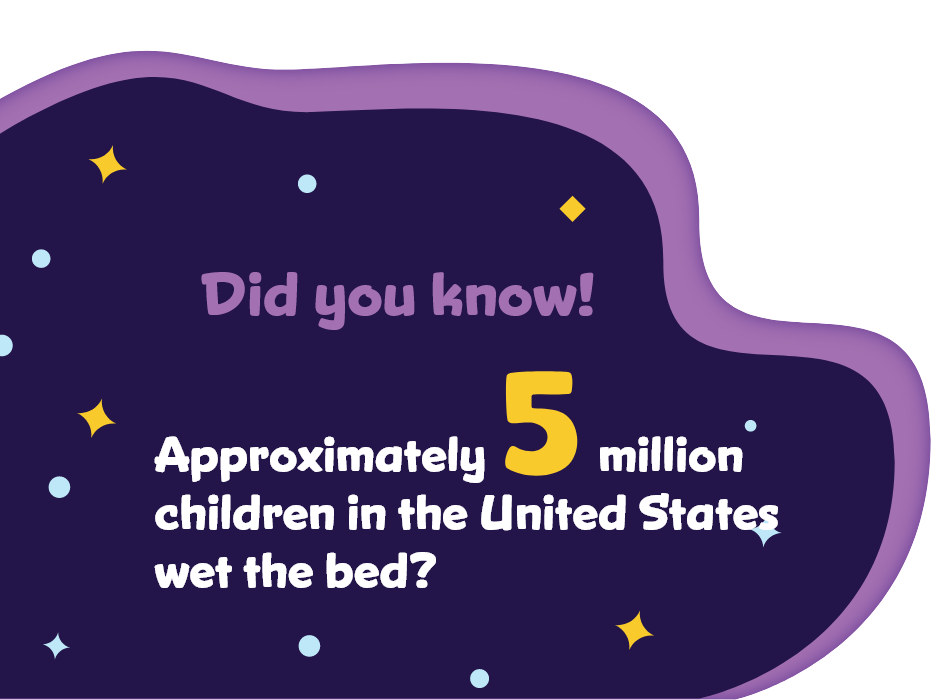
Did you know!
Approximately 5 million children in the United States wet the bed?
How common is bedwetting?
Bedwetting is a common disease, that affects approximately 1 in 10 children.
It is more prevalent among younger children, affecting around 30% of those aged 7 and under, and approximately 5% of 10-year-old children.
Among teenagers, it is estimated that 1% to 2% of 15-year-olds experience bedwetting. For adults over the age of 18, around 2% to 3% have primary nocturnal enuresis
If your child is dealing with bedwetting, it’s important to know they are not alone.
How common is bedwetting?
Bedwetting is a common disease, that affects approximately 1 in 10 children.
It is more prevalent among younger children, affecting around 30% of those aged 7 and under, and approximately 5% of 10-year-old children.
Among teenagers, it is estimated that 1% to 2% of 15-year-olds experience bedwetting. For adults over the age of 18, around 2% to 3% have primary nocturnal enuresis
If your child is dealing with bedwetting, it’s important to know they are not alone.
Congratulations you have successfully achieved dry nights in a row !